


Sliding Gate Installation in Rancho Cordova
Rancho Cordova's mix of level suburban lots and busy commercial frontage makes sliding gates practical — but a short run-off decides V-track vs cantilever before anything else.


$1,500 Off
Your Custom Gate & Opener Installation
Get a Free Estimate
FREE same-day estimates on all gate projects.


Industry-Leading Equipment
We install and service gate automation, access control, and safety systems from the most trusted manufacturers in the industry.








- LiftMaster
- DoorKing
- HySecurity
- Viking Access
- Nice
- FAAC
- Nice Apollo Gate Openers
- Maximum Controls
- All-O-Matic
- USAutomatic
- Linear
- DoorBird
Sliding Gate Installation in Rancho Cordova, CA
Across much of Rancho Cordova — the level suburban blocks off Zinfandel and White Rock, plus the light-industrial and logistics frontage along Folsom Blvd — a slider often beats a swing, though the newer developments toward the east and the river bluffs carry more grade than the valley-floor tracts do. Either way, the gate that fits is decided at the property line: how much level run-off sits parallel to your entry is the first question, and it splits the whole job into V-track versus cantilever.
V-track vs. cantilever: the run-off decides it
A sliding gate needs somewhere to go when it opens — a "run-off" of clear space beside the opening, at least the full width of the leaf. That, and how level the ground is, is what separates the two systems. Neither is "better"; they solve different sites.
The gate rides on wheels in a steel V-track set into the driveway. It carries heavy leaves cheaply and quietly — but it demands a flat, level, straight run and a clean track. On the level parcels we see around Rancho Cordova that's often achievable, which is one reason V-track is a common pick here. It's the wrong choice on any noticeable driveway slope or where you can't keep the slot clear.
The leaf hangs from posted rollers and floats past the opening with nothing touching the ground — so nothing to sweep out, and it clears minor grade and drainage. The trade-off is length: a cantilever needs a counterbalance tail behind the opening, so as a rough rule of thumb the run-off runs to something like 1.5× the opening width — the exact figure varies by gate design and manufacturer. Short side yard, no cantilever.
As openings get wider, a single sliding leaf becomes heavier and needs more run-off and operator capacity; on very wide entrances, bi-parting or other configurations may make more sense. Wide commercial entries off Folsom or Mather often go bi-parting (two leaves meeting in the middle) or revert to a swing pair — half the run-off each, and lighter operators.
A short, level suburban drive near Zinfandel
Picture a 16-ft opening with barely 14 ft of side yard before a fence line — not enough tail for a cantilever. If the drive is genuinely flat and level, V-track is the natural call: a poured, screeded track pad, a single steel leaf, and an operator sized to the leaf weight and the expected daily open-close count. The same lot with a few percent of slope, or a foot less clearance, would push the decision toward a swing gate instead. The point is the sequence — run-off first, grade second, system last.
When a slide beats a swing here
Rancho Cordova's mix of tight suburban frontage and busy commercial approaches makes sliders attractive for reasons that have nothing to do with looks:
| Condition | Why slide wins |
|---|---|
| Short driveway | A swing leaf needs an arc of clear driveway to open into; a slider needs none, so cars can wait right at the gate. |
| Downhill drive | A swing gate that opens outward or inward across a grade binds or drags; a slider runs level along the fence line. |
| High-traffic commercial | Sliders take fast, repeated cycles better and pair with AC hydraulic operators for logistics and yard access off Folsom/Mather. |
| Wind & solid infill | A solid swing leaf catches Valley wind like a sail and loads its hinges; a slider's weight rides the track, not a hinge post. |
Track and roller upkeep — the part that fails first
A slider is a rolling machine, and the local environment works against the moving parts. High daily cycle counts on residential and commercial gates fatigue rollers and V-track wheels; heavier leaves accelerate it. Grit, dust, and fall leaf debris work their way into the track slot, grinding wheels and chain drives and eventually straining the operator gearbox. And the Central Valley's stretch of triple-digit summer days is hard on the operator enclosure — control boards and battery backups tend to have a shorter life in sustained heat. That wear profile is exactly why motor sizing and a real maintenance cadence aren't optional.
What a cheap slider install skips
- Undersized operator — the leaf weight and cycle count get ignored, so the motor runs hot and short on Rancho Cordova's high-use gates.
- No track-clearing plan — a V-track slot packed with grit and leaves chews wheels within a season.
- An operator enclosure baking in full sun with no shade or ventilation, halving control-board and battery life.
- Skimped track pad — a V-track set on ground that isn't dead-flat and level guarantees a gate that binds and jumps.
- Safety devices (photo-eyes, edges) placed without clearing the vehicle path, so they nuisance-trip or miss the opening — undercutting the entrapment protection those monitored devices are meant to provide.
DC Controls is family-owned and Loomis-based, serving Rancho Cordova and greater Sacramento for 25+ years — CA #1114559 (General Building, C-13 Fencing, D-28 Doors & Gates), $25k bond, insured, BuildZoom 93. Design, fabrication, install, and service are in-house — no subs. We install automated vehicular gates using UL 325-listed operators and the required monitored entrapment-protection devices (such as photo eyes and/or gate edges) for the application, on factory-trained LiftMaster, DoorKing, HySecurity, and Viking equipment.
Rancho Cordova Sliding Gate Installation FAQ
V-track or cantilever for my property?
It comes down to your side-yard run-off and grade. If the ground beside the opening is flat, level, and you have room for the full leaf, V-track is economical and quiet. If the drive has any slope, drainage crossing the track, or you'd rather nothing touch the ground, cantilever is the call — but as a rough rule of thumb it needs run-off on the order of 1.5× the opening width for its counterbalance, and the exact figure varies by gate design and manufacturer. A short side yard rules cantilever out.
Is my lot flat enough for a sliding gate?
Many we look at are, which is one reason sliders are a common pick here — though newer developments toward the east and lots near the river bluffs carry more grade. V-track specifically needs a genuinely flat, level path for the wheels; even a modest slope pushes you toward a cantilever or a swing gate. We confirm grade with an on-site check before recommending a system — it's not something to eyeball.
How wide can a single sliding gate go?
As openings get wider, a single sliding leaf becomes heavier and needs more run-off and operator capacity, so on very wide entrances bi-parting or other configurations may make more sense. Wider commercial entries off Folsom Blvd or Mather often go bi-parting — two leaves meeting in the middle — which also halves the run-off each side needs. We size the design to the opening rather than forcing one leaf.
How often does the track need maintenance?
Plan on a proactive cadence, not a wait-until-it-breaks approach. Grit and fall leaf debris pack into V-track slots and grind the wheels, and sustained summer heat is hard on the operator's electronics. Clearing the track, checking rollers, and inspecting the operator on a regular schedule catches small wear before it strains the gearbox into a costly failure. How often depends on the gate's use and its exposure.
Why choose a slider over a swing gate?
Sliders win on short driveways (no arc needed for a leaf to swing into), on sloped approaches where a swing would bind, in wind where a solid swing leaf loads its hinges, and on high-cycle commercial entries. On a wide, flat lot with plenty of clear driveway, a swing gate can still be the simpler and cheaper choice — the site decides.
Will safety devices meet code on my entry?
Every automated slider we install uses a UL 325-listed operator and the required monitored entrapment-protection devices (such as photo eyes and/or gate edges) for the application. On tighter Rancho Cordova entries that sometimes means adjusting where the operator and sensors sit, or relocating a utility or pillar, so the devices clear the vehicle path and actually protect the opening rather than nuisance-tripping. Local permitting and inspection requirements vary, so we confirm what applies to your entry.
DC Controls is a licensed California General Engineering (“A”) and General Building (“B”) contractor, also holding C-61/D28 (Doors, Gates & Activating Devices) and C-13, under CA License #1114559. Every part of your project, from the gate to the electrical, concrete, and structural work, is handled in-house by one accountable team.
Serviced ZIP Codes: 95670, 95742
Other Service Areas
Why DC Controls
The Right Choice for Your Gate Project
Free, No-Pressure Estimates
Clear, upfront pricing with zero hidden costs.
25+ Years of Experience
Local craftsmanship trusted for decades.
Second-Generation Service
Our team will still be around when your gate needs service.
Top-Quality Materials
Built for security, reliability, and lasting durability.
Fully Licensed & Insured
Licensed General “A” & “B” contractor (CA #1114559) — we self-perform the electrical, concrete & structural work in-house.
Clean, Respectful Crews
We treat your property like it's our own.


Ready to start your gate project?
Clear, upfront pricing — no pressure, no surprises.

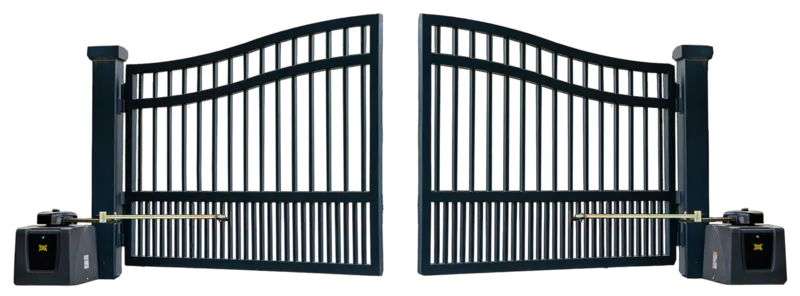
Custom Gate & Opener Installation
Get a custom automatic gate installed for your home. Free consultation included.
Claim OfferAbout Us
Licensed and Certified
Contact Us
5.0
out of 5 stars
Hundreds of Happy Customers
Real reviews from real customers — see what they have to say about their experience with DC Controls.


Daniil S.
13 June 2026
Guys definitely know what they are doing. We have them instal a motor and recently upgraded our keypad. Use them once and you will be with them for the long run.


Sergey S.
12 June 2026
I recently had a gate opener installed at my house and couldn’t be happier with the service. The installation was clean, efficient, and completed exactly as promised. The technician was knowledgeable, friendly, and answered all of my questions. Highly recommend!


Valerie Q.
19 May 2026
Thank you Alex and Daniel and Julian! We appreciate the excellent customer service and the extra effort to make sure everything was running smoothly for us! 😊 …


Need a Sliding Gate in Rancho Cordova?
Request a free on-site consultation with DC Controls. We’ll measure your opening, check the side room, and follow up with a clear, itemized estimate.