


Gate Installation in Rescue
Rescue’s long foothill driveways mean long trenches, rock saws, and grades that often push a gate toward a slide — the ground sets the terms before the gate is chosen.


$1,500 Off
Your Custom Gate & Opener Installation
Get a Free Estimate
FREE same-day estimates on all gate projects.


Industry-Leading Equipment
We install and service gate automation, access control, and safety systems from the most trusted manufacturers in the industry.










- LiftMaster
- DoorKing
- HySecurity
- Viking Access
- Nice
- FAAC
- Nice Apollo Gate Openers
- Maximum Controls
- All-O-Matic
- USAutomatic
- Linear
- DoorBird
Gate Installation in Rescue, CA
The extended driveways that define Rescue tell us the first thing we need to know: this will be a long trench and a long power run. Add foothill grades and a dig that can hit decomposed granite or shallow bedrock, and the site sets the terms — we design the gate to fit them.
A Rescue install lives or dies on the below-grade work: how the footing is set in rocky, moving ground, how the conduit gets to the gate over distance, and how both dodge the oaks and pines. The gate itself follows from those answers.
| What the site shows | What it drives |
|---|---|
| Extended driveway | Long trench; wire sized for the run to hold voltage |
| Foothill grade across the line | Cantilever or V-track slide over a swing that would drag |
| Decomposed granite / shallow bedrock | Rock saw for clean trenching; deeper, wider piers |
| Oak & pine root systems | Conduit deviated or buried deeper to clear the roots |
| Clay-heavy subgrade, where present | Piers set below the seasonal-movement zone |
Grade often points to a slide
The characteristic foothill grades around Rescue often show a real change across the gate line, and that’s exactly where a swing struggles — the leaf fights the slope as it opens. On those lots a cantilever or V-track slide, which travels along the fence and ignores the grade, is often the more reliable choice. Where a swing still fits, we’d match the operator to the rise. We’d rather solve the grade at the design stage than hand you a gate that drags every day.
Rock, roots, and deep piers
Footing and conduit digs in Rescue regularly hit decomposed granite and sometimes shallow bedrock, which means a rock saw for clean trenching and solid pier construction rather than a quick shovel job. Where the subgrade turns to clay, seasonal expansion and contraction pushes on the footing and can slowly shift a post out of true — so we set deeper, wider piers below that active zone. Mature oak and pine roots get routed around or buried deeper; a nicked root keeps growing and can crush a conduit later, severing the low-voltage lines that run your photo-eyes and detectors.
What a lasting Rescue install gets right
- Wire sized for the full driveway run, so voltage drop doesn’t starve the operator and shorten its motor’s life.
- Piers set below the seasonal-movement zone in clay subgrade, not a shallow flat-lot footing.
- Conduit routed clear of oak and pine roots, so root intrusion doesn’t sever safety-device wiring down the line.
- Junction boxes sealed against wet-winter moisture, keeping the control board out of trouble.
- Battery backup sized for the operator’s duty cycle, so a long run and an outage don’t leave you stranded.
We install automated vehicular gates using UL 325-listed operators and the required monitored entrapment-protection devices (photo eyes and/or gate edges) for the application, with the gate built to ASTM F2200 for openings and gaps. We’re factory-trained on LiftMaster, DoorKing, HySecurity, and Viking, so the operator matches the leaf and the duty cycle. On the long, rocky runs Rescue is full of, the trenching and wiring plan is where the reliability is won. Permitting varies by jurisdiction — we’ll tell you what your address requires.
Get a gate built for a long foothill run
We’ll walk the driveway, read the rock and the grade, and design the right gate in our own Loomis shop. Free on-site estimate across Rescue and greater Sacramento.
Rescue Gate Installation FAQ
My driveway is steep. Swing or slide?
A real grade across the gate line usually points to a cantilever or V-track slide, which travels along the fence and doesn’t fight the slope the way a swing does. Where a swing still fits, we match the operator to the rise. We measure the grade on site before recommending one.
What if you hit rock while trenching?
It’s common in Rescue. We bring a rock saw for clean trenching and build solid piers keyed to the ground. It affects the pace and the footing design, which is one reason we assess the dig on site rather than quoting it blind.
My gate will be far from the panel. Will it get enough power?
Yes, if the wire is sized for the distance. Long runs lose voltage, and an underfed operator labors and wears its motor early. We size the conductors for the run and, where it’s very long, look at a sub-panel or a solar-assisted setup closer to the gate.
How do you protect the wiring from tree roots?
We route the conduit around the major oak and pine root balls or bury it deeper to clear them. Roots that get nicked keep growing and can crush the line later, cutting power to safety devices. Planning the trench around them at install is what prevents that failure.
Will an outage leave my gate stuck?
Not if the backup is sized right. We spec battery backup for the operator’s duty cycle so the gate still works through an outage. On long runs we also make sure the operator isn’t already fighting voltage drop, which shortens backup life. It’s all part of the on-site plan.
DC Controls is a licensed California General Engineering (“A”) and General Building (“B”) contractor, also holding C-61/D28 (Doors, Gates & Activating Devices) and C-13, under CA License #1114559. Every part of your project, from the gate to the electrical, concrete, and structural work, is handled in-house by one accountable team.
Serviced ZIP Codes: 95672
Other Service Areas
Why DC Controls
The Right Choice for Your Gate Project
Free, No-Pressure Estimates
Clear, upfront pricing with zero hidden costs.
25+ Years of Experience
Local craftsmanship trusted for decades.
Second-Generation Service
Our team will still be around when your gate needs service.
Top-Quality Materials
Built for security, reliability, and lasting durability.
Fully Licensed & Insured
Licensed General “A” & “B” contractor (CA #1114559) — we self-perform the electrical, concrete & structural work in-house.
Clean, Respectful Crews
We treat your property like it's our own.


Ready to start your gate project?
Clear, upfront pricing — no pressure, no surprises.

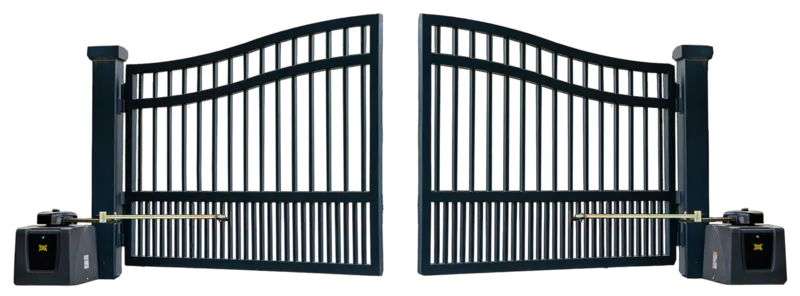
Custom Gate & Opener Installation
Get a custom automatic gate installed for your home. Free consultation included.
Claim OfferAbout Us
Licensed and Certified
Contact Us
5.0
out of 5 stars
Hundreds of Happy Customers
Real reviews from real customers — see what they have to say about their experience with DC Controls.


Daniil S.
13 June 2026
Guys definitely know what they are doing. We have them instal a motor and recently upgraded our keypad. Use them once and you will be with them for the long run.


Sergey S.
12 June 2026
I recently had a gate opener installed at my house and couldn’t be happier with the service. The installation was clean, efficient, and completed exactly as promised. The technician was knowledgeable, friendly, and answered all of my questions. Highly recommend!


Valerie Q.
19 May 2026
Thank you Alex and Daniel and Julian! We appreciate the excellent customer service and the extra effort to make sure everything was running smoothly for us! 😊 …


Get Professional Gate Installation in Rescue
Request a free on-site estimate for gate installation in Rescue. DC Controls is a licensed, insured contractor with years of local experience.