


Wrought Iron Gates in Lincoln
In Lincoln, iron vs steel vs aluminum and the finish under the color decide how a driveway gate ages. Here's what actually lasts in this climate.


$1,500 Off
Your Custom Gate & Opener Installation
Get a Free Estimate
FREE same-day estimates on all gate projects.


Industry-Leading Equipment
We install and service gate automation, access control, and safety systems from the most trusted manufacturers in the industry.









- LiftMaster
- DoorKing
- HySecurity
- Viking Access
- Nice
- FAAC
- Nice Apollo Gate Openers
- Maximum Controls
- All-O-Matic
- USAutomatic
- Linear
- DoorBird
Wrought Iron Gates in Lincoln, CA
Lincoln's fast growth means everything from Sun City tract entries to custom estate gates, often under an HOA and always under a hard Placer County sun. Whatever the style the review board signs off on, it's the metal and the finish sequence beneath it that decide how the gate ages.
The parts of a gate people notice — the pattern, the finials, the color — aren't the parts that fail in Lincoln. Weight, footing, and the coating sequence are, and those are decided in the metal you build from.
Iron vs. steel vs. aluminum, honestly
Weight, strength, and rust behavior pull in different directions across these three. Here's the real-world tradeoff on a Lincoln opening.
| Material | Strength & feel | How it handles valley sun | Where it fits |
|---|---|---|---|
| Welded mild steel | High strength and real heft — the solid feel people mean by “iron.” Takes ornamental scrollwork and forging well. | Rusts quickly once the finish is breached, so it has to be galvanized or zinc-primed before topcoat or the welds bleed rust within a few winters. | Estate swing and bi-parting gates where mass and an authentic look matter. |
| True wrought iron | Historically hand-forged, more corrosion-resistant, with a softer distinctive grain — but scarce and costly today. | More forgiving than mild steel, yet still needs a maintained finish; genuine forged stock is rare and priced for it. | Restoration work or a client who specifically wants forged authenticity. |
| Aluminum | Light and rust-proof, easy on hinges and operators — but lacks heft, dents more easily, and welds weaker. | Immune to structural rust; the powder coat still fades under UV, but there's no corrosion working underneath it. | Very wide openings, or where cutting leaf weight protects the operator and footings. |
On a typical Lincoln gate we build in welded steel and galvanize it before finishing; where reducing weight protects an old pillar or a marginal footing, aluminum earns its place despite the loss of heft.
The coating stack that survives this sun
Two gates can look identical the day they're hung and diverge completely by year five, and the reason is almost always what's under the color. Against the hard Central Valley summer of high UV and long heat cycles, the build-up of the finish is what counts:
| Approach | What it is | How it holds up in Lincoln |
|---|---|---|
| Paint over bare steel | A single coat straight onto raw metal. | The cheapest option and the shortest-lived — rust starts at the welds within a few winters. |
| Single powder coat | One decorative powder layer, no zinc underneath. | Looks good at first; chalks, fades, and undercuts with rust once UV opens the film. |
| Galvanize + UV two-coat | Zinc layer first, then primer and a UV-stable topcoat. | The system we build to — the zinc keeps a scratch from becoming a rust bloom, and the UV coat holds color far longer. |
The wet side of the problem is winter rain and landscape sprinkler overspray, which find any weak point in the finish and work into the welds and pivots. Sequencing zinc under color is what keeps that from turning into structural rust.
Design and fabrication under one roof
Every gate is designed, fabricated, and finished in-house, so the ironwork answers the house instead of coming off a stock rack. On Lincoln's ranch, Mediterranean, and Spanish-style custom homes we read the existing pillars and the home's lines first, then set scrollwork density, picket spacing, and the top-rail profile to suit — restrained flat- or arched-top for cleaner ranch and contemporary looks, denser forged scroll and finials for Mediterranean and Spanish. A detail from an entry arch or a pillar cap can be echoed in the metal rather than approximated.
Building it ourselves also means the welds, the pre-coat prep, and the galvanizing are done to one standard rather than handed off — which is exactly where a gate's corrosion life is won or lost.
Why the leaf weight drives everything below it
A solid iron leaf is heavy, and that mass is unforgiving of a weak mount. Old stucco or brick pillars often can't carry it, so on many jobs we set new steel posts in footings sized to the leaf — and where present, that clay and adobe subgrade makes footing depth a genuine design input. Get the post and footing wrong and the gate sags, drags, and throws its hinges out of line within a season or two; get it right and the same leaf swings true for decades.
The heavier the leaf, the harder it also leans on the hinges and, on an automated gate, the operator's gearbox. That's the quiet argument for galvanized steel over an overbuilt bare-steel gate, and occasionally for aluminum: keeping mass reasonable protects everything downstream of it.
A wide iron entry on a wide entry with generous setback in Lincoln
We'd size the leaf (or leaves) to the opening, pour new footings and set steel posts able to carry the mass — the old pillars rarely are — galvanize and two-coat the steel, then hang it and, if it's automated, set a UL 325-listed operator with the required monitored entrapment-protection devices (such as photo eyes and/or a gate edge) for the application. And on a tighter approach where a big swing would sweep into the drive lane, we switch the same ironwork to a cantilever slide — same look, different mechanism.
The failures that trace back to the build
- No plan for sprinkler overspray, leaving the base of the gate wet night after night.
- Welds left rough and uncleaned before coating, giving moisture a foothold right where the metal is most stressed.
- Paint or powder straight over bare steel with no galvanizing — rust at the welds within a few winters.
- Reusing old stucco or brick pillars for hinges instead of setting posts sized to the leaf, so the gate sags and drags.
- Undersized hinges and an operator not rated for a heavy solid leaf — the gearbox wears out early under constant high-leverage load.
DC Controls is a family-owned, second-generation gate contractor, 25+ years, based in Loomis and serving Lincoln and greater Sacramento. Licensed CA #1114559 (General Building (B), C-13 Fencing, and D-28 Doors, Gates & Activating Devices), $25,000 bonded, with in-house design, fabrication, installation, and service — no subs. Factory-trained on LiftMaster, DoorKing, HySecurity, and Viking. We install automated vehicular gates using UL 325-listed operators and the required monitored entrapment-protection devices (such as photo eyes and/or gate edges) for the application; permitting and inspection requirements vary by jurisdiction. Daniel Cojocaru, CEO/President.
Lincoln Wrought Iron Gates FAQ
Can the ironwork match my home's architecture?
Yes — that's the reason we build in-house. We read your pillars and the home's style, then design the scrollwork density, picket spacing, and top-rail to suit it, and we can echo a detail from your entry rather than using a stock panel.
Is my gate actually wrought iron?
Most likely it's welded mild steel — genuine hand-forged wrought iron is scarce and costly today, and many “iron” gates around Lincoln are steel finished to look forged. That's perfectly good: welded steel is strong and takes ornamental work well. What matters is that it's galvanized before it's coated, which is what really sets how long it lasts here.
How often will a Lincoln iron gate need refinishing?
More often than in a mild climate because of the UV load, though the exact interval varies with exposure, the finish, and how the gate is maintained. Plan on regular inspections to catch fade, chalking, and finish breaches early. A properly galvanized-and-two-coated gate stretches that interval considerably; a single-coat paint job shortens it.
Is powder-coat color choice just cosmetic, or does it affect durability?
Mostly cosmetic, with one caveat: the topcoat has to be UV-stable to hold up to this sun, and darker colors show chalking sooner as they fade. The bigger durability lever by far is what's under the color — the zinc layer and whether it's a proper two-coat system.
How deep do the footings need to be?
That varies with the leaf weight, the opening width, and the soil — clay and adobe subgrade where present changes the answer — so it's engineered to the specific gate rather than a fixed number. The goal is simple: no sag, no heave, no drift out of alignment over time.
DC Controls is a licensed California General Engineering (“A”) and General Building (“B”) contractor, also holding C-61/D28 (Doors, Gates & Activating Devices) and C-13, under CA License #1114559. Every part of your project, from the gate to the electrical, concrete, and structural work, is handled in-house by one accountable team.
Serviced ZIP Codes: 95648
Other Service Areas
Why DC Controls
The Right Choice for Your Gate Project
Free, No-Pressure Estimates
Clear, upfront pricing with zero hidden costs.
25+ Years of Experience
Local craftsmanship trusted for decades.
Second-Generation Service
Our team will still be around when your gate needs service.
Top-Quality Materials
Built for security, reliability, and lasting durability.
Fully Licensed & Insured
Licensed General “A” & “B” contractor (CA #1114559) — we self-perform the electrical, concrete & structural work in-house.
Clean, Respectful Crews
We treat your property like it's our own.


Ready to start your gate project?
Clear, upfront pricing — no pressure, no surprises.

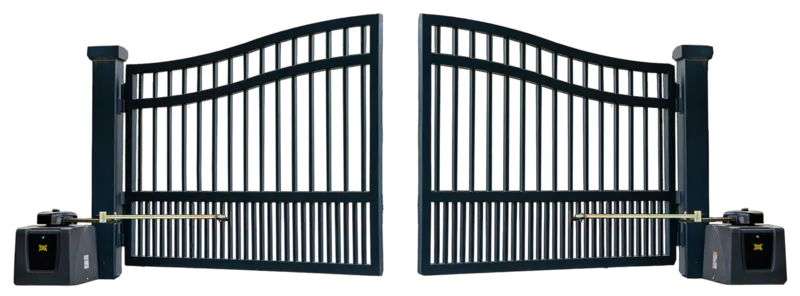
Custom Gate & Opener Installation
Get a custom automatic gate installed for your home. Free consultation included.
Claim OfferAbout Us
Licensed and Certified
Contact Us
5.0
out of 5 stars
Hundreds of Happy Customers
Real reviews from real customers — see what they have to say about their experience with DC Controls.


Daniil S.
13 June 2026
Guys definitely know what they are doing. We have them instal a motor and recently upgraded our keypad. Use them once and you will be with them for the long run.


Sergey S.
12 June 2026
I recently had a gate opener installed at my house and couldn’t be happier with the service. The installation was clean, efficient, and completed exactly as promised. The technician was knowledgeable, friendly, and answered all of my questions. Highly recommend!


Valerie Q.
19 May 2026
Thank you Alex and Daniel and Julian! We appreciate the excellent customer service and the extra effort to make sure everything was running smoothly for us! 😊 …


Want a Wrought Iron Gate in Lincoln?
Request a free on-site consultation with DC Controls. We’ll measure, talk through designs and finishes, and follow up with a clear, itemized estimate.