


Wrought Iron Gates in Galt
How wrought iron, welded steel, and aluminum really hold up on a Galt driveway — plus the galvanize-first finish sequence that fights UV and rust.


$1,500 Off
Your Custom Gate & Opener Installation
Get a Free Estimate
FREE same-day estimates on all gate projects.


Industry-Leading Equipment
We install and service gate automation, access control, and safety systems from the most trusted manufacturers in the industry.









- LiftMaster
- DoorKing
- HySecurity
- Viking Access
- Nice
- FAAC
- Nice Apollo Gate Openers
- Maximum Controls
- All-O-Matic
- USAutomatic
- Linear
- DoorBird
Wrought Iron Gates in Galt, CA
Galt's south-county properties run to long driveways and agricultural edges, where sprinklers and irrigation keep the base of a gate wet and the summer keeps the top of it baking. That split — wet feet, hot head — is exactly what the material and coating have to be chosen for.
The parts of a gate people notice — the pattern, the finials, the color — aren't the parts that fail in Galt. Weight, footing, and the coating sequence are, and those are decided in the metal you build from.
The material decision comes first
Very little sold as “wrought iron” in the Galt market is actually hand-forged iron. Most ornamental gates are welded mild steel finished to look forged, and some are aluminum dressed the same way. None of that is a problem — but it changes how the gate has to be protected.
The workhorse: strong, heavy, and convincingly “iron.” Its one weakness is rust, so it has to be galvanized or zinc-primed before any color goes on. Done right, it's the best all-around choice for a Galt estate leaf.
Genuinely forged iron resists corrosion better and carries a distinctive grain, but it's scarce and expensive today. We reserve it for restoration or a client who specifically wants the real thing.
Won't rust and stays light, which spares the hinges and operator on a wide opening. The tradeoff is heft and dent-resistance — it never feels quite as solid as steel and its welds are weaker.
On a typical Galt gate we build in welded steel and galvanize it before finishing; where reducing weight protects an old pillar or a marginal footing, aluminum earns its place despite the loss of heft.
Why the leaf weight drives everything below it
A solid iron leaf is heavy, and that mass is unforgiving of a weak mount. Old stucco or brick pillars often can't carry it, so on many jobs we set new steel posts in footings sized to the leaf — and where present, that clay subgrade makes footing depth a genuine design input. Get the post and footing wrong and the gate sags, drags, and throws its hinges out of line within a season or two; get it right and the same leaf swings true for decades.
The heavier the leaf, the harder it also leans on the hinges and, on an automated gate, the operator's gearbox. That's the quiet argument for galvanized steel over an overbuilt bare-steel gate, and occasionally for aluminum: keeping mass reasonable protects everything downstream of it.
Coating and rust: what actually protects the metal
The Galt finish problem is specific and predictable. Against the hard Central Valley summer of high UV and long heat cycles, a powder coat fades and chalks, and once that film is compromised the bare metal is exposed. Then winter rain, agricultural irrigation, and sprinkler overspray reach the welds and pivot points and start the rust exactly where it does the most harm. That's why the finish sequence matters more than the color:
Hot-dip or zinc-rich primer under the topcoat gives a sacrificial layer, so a scratch or a faded patch doesn't immediately bloom into rust. In our experience it's one of the biggest factors in how long a gate lasts here.
A UV-rated topcoat over primer holds color far longer against this sun than a single decorative coat — which is exactly where budget gates chalk and fade early.
We flag irrigation and sprinkler overspray at install and adjust or reroute heads. Constant nightly wetting of the lowest pickets and posts is one common rust accelerator we see on iron gates in this climate.
Design and fabrication under one roof
Because the design, welding, finishing, and installation are all ours — not subcontracted — the gate can be tuned to the property rather than the catalog. For Galt's ranch, Spanish, and Mediterranean architecture, that means matching the ornament to the house: heavier scroll and arched tops where the style calls for it, clean vertical picket and simpler rails where it doesn't. We size the frame and infill to the actual opening, not a nominal one.
Keeping fabrication in-house is also what lets us control the part that matters most for longevity: proper weld cleanup and a full galvanize-then-coat sequence before the gate ever leaves the shop.
The failures that trace back to the build
- Undersized hinges and an operator not rated for a heavy solid leaf — the gearbox wears out early under constant high-leverage load.
- Paint or powder straight over bare steel with no galvanizing — rust at the welds within a few winters.
- No plan for irrigation and sprinkler overspray, leaving the base of the gate wet night after night.
- Footings too shallow for the soil, so the posts heave or settle and the gate loses its alignment.
- Welds left rough and uncleaned before coating, giving moisture a foothold right where the metal is most stressed.
A wide iron entry on a wide entry with generous setback in Galt
We'd size the leaf (or leaves) to the opening, pour new footings and set steel posts able to carry the mass — the old pillars rarely are — galvanize and two-coat the steel, then hang it and, if it's automated, set a UL 325-listed operator with the required monitored entrapment-protection devices (such as photo eyes and/or a gate edge) for the application. And on a tighter approach where a big swing would sweep into the drive lane, we switch the same ironwork to a cantilever slide — same look, different mechanism.
DC Controls is a family-owned, second-generation gate contractor, 25+ years, based in Loomis and serving Galt and greater Sacramento. Licensed CA #1114559 (General Building (B), C-13 Fencing, and D-28 Doors, Gates & Activating Devices), $25,000 bonded, with in-house design, fabrication, installation, and service — no subs. Factory-trained on LiftMaster, DoorKing, HySecurity, and Viking. We install automated vehicular gates using UL 325-listed operators and the required monitored entrapment-protection devices (such as photo eyes and/or gate edges) for the application; permitting and inspection requirements vary by jurisdiction. Daniel Cojocaru, CEO/President.
Galt Wrought Iron Gates FAQ
Should I choose aluminum instead of iron for a wide driveway?
Sometimes. On a very wide opening, aluminum's light weight takes real strain off the hinges, footings, and operator gearbox, and it can't rust. The tradeoff is that it lacks steel's heft and dents more easily. If the estate look and mass matter to you, galvanized steel is the call; if reducing leaf weight protects the structure, aluminum is worth a serious look.
How deep do the footings need to be?
That varies with the leaf weight, the opening width, and the soil — clay subgrade where present changes the answer — so it's engineered to the specific gate rather than a fixed number. The goal is simple: no sag, no heave, no drift out of alignment over time.
Can you automate an iron gate I already have?
Often, yes — but the gate has to be sound first. We check the frame, hinges, and footing for the added stress of daily cycling, then set a UL 325-listed operator with the required monitored entrapment-protection devices for the application. If the existing gate is sagging or under-footed, that gets addressed before any motor goes on.
Is powder-coat color choice just cosmetic, or does it affect durability?
Mostly cosmetic, with one caveat: the topcoat has to be UV-stable to hold up to this sun, and darker colors show chalking sooner as they fade. The bigger durability lever by far is what's under the color — the zinc layer and whether it's a proper two-coat system.
Will a heavy iron gate wear out my opener faster?
It can, if the operator isn't sized for the leaf. A solid iron gate puts constant high-leverage load on the hinges and the gearbox, so the operator has to be matched to the actual weight and duty cycle. Where a leaf is very wide, keeping the mass reasonable — sometimes with aluminum — is part of protecting the operator.
DC Controls is a licensed California General Engineering (“A”) and General Building (“B”) contractor, also holding C-61/D28 (Doors, Gates & Activating Devices) and C-13, under CA License #1114559. Every part of your project, from the gate to the electrical, concrete, and structural work, is handled in-house by one accountable team.
Serviced ZIP Codes: 95632
Other Service Areas
Why DC Controls
The Right Choice for Your Gate Project
Free, No-Pressure Estimates
Clear, upfront pricing with zero hidden costs.
25+ Years of Experience
Local craftsmanship trusted for decades.
Second-Generation Service
Our team will still be around when your gate needs service.
Top-Quality Materials
Built for security, reliability, and lasting durability.
Fully Licensed & Insured
Licensed General “A” & “B” contractor (CA #1114559) — we self-perform the electrical, concrete & structural work in-house.
Clean, Respectful Crews
We treat your property like it's our own.


Ready to start your gate project?
Clear, upfront pricing — no pressure, no surprises.

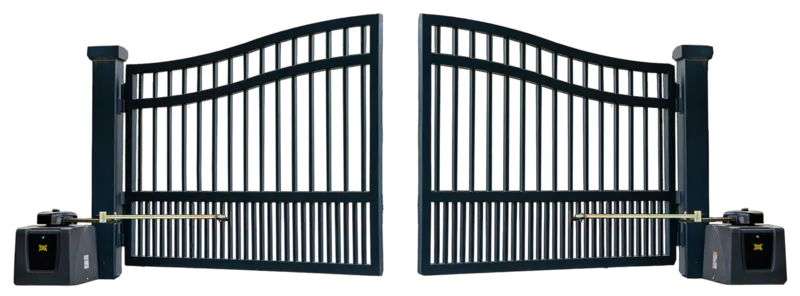
Custom Gate & Opener Installation
Get a custom automatic gate installed for your home. Free consultation included.
Claim OfferAbout Us
Licensed and Certified
Contact Us
5.0
out of 5 stars
Hundreds of Happy Customers
Real reviews from real customers — see what they have to say about their experience with DC Controls.


Daniil S.
13 June 2026
Guys definitely know what they are doing. We have them instal a motor and recently upgraded our keypad. Use them once and you will be with them for the long run.


Sergey S.
12 June 2026
I recently had a gate opener installed at my house and couldn’t be happier with the service. The installation was clean, efficient, and completed exactly as promised. The technician was knowledgeable, friendly, and answered all of my questions. Highly recommend!


Valerie Q.
19 May 2026
Thank you Alex and Daniel and Julian! We appreciate the excellent customer service and the extra effort to make sure everything was running smoothly for us! 😊 …


Want a Wrought Iron Gate in Galt?
Request a free on-site consultation with DC Controls. We’ll measure, talk through designs and finishes, and follow up with a clear, itemized estimate.