


Automatic Gates in Cameron Park
On Cameron Park's winding, graded drives the site picks the gate; we size the operator to the leaf and back it with battery or solar so an outage never strands access.


$1,500 Off
Your Custom Gate & Opener Installation
Get a Free Estimate
FREE same-day estimates on all gate projects.


Industry-Leading Equipment
We install and service gate automation, access control, and safety systems from the most trusted manufacturers in the industry.









- LiftMaster
- DoorKing
- HySecurity
- Viking Access
- Nice
- FAAC
- Nice Apollo Gate Openers
- Maximum Controls
- All-O-Matic
- USAutomatic
- Linear
- DoorBird
Automatic Gates in Cameron Park, CA
Automating a gate in Cameron Park means solving three problems at once: picking a gate the site can run, driving it with an operator sized to the leaf and its cycle count, and keeping it moving through a power outage. We handle all three in-house rather than bolting a motor to an existing gate and hoping.
Read the entry first, then choose the automation
The operator is the last decision, not the first. On Cameron Park properties we look at longer, winding driveways with grade changes and let the geometry rule out the gates that won't work smoothly before we ever match a motor to one.
Workable where there's level ground and a clear arc behind the pillars. Grade rising at the entry is what tends to rule a swing operator out, so we check the slope before quoting one.
The default when the drive is long, the entry pitches, or there's no room to arc a leaf. Cantilever skips a ground track that dust and debris would otherwise foul.
When there isn't room for a full slide to retract but a straight swing won't clear the approach either, an articulated arm folds the gate within a tighter pocket.
Keeping the gate cycling through an outage
PSPS shutoffs and storm outages are a real planning factor around Cameron Park, and a gate that can't cycle on battery strands you — or worse, strands emergency access. Every automation we install includes battery backup, and on properties that see long or repeated outages we spec a solar-assisted operator so the batteries recharge between events. Two conditions we often see shape how we size it: hot, full-sun summers heat operator enclosures and can shorten battery life, so we tend to build in ventilation and size the battery to real cycle life rather than trust the nameplate rating; and winter rain that gets into an unsealed enclosure can be one cause of an otherwise healthy operator going intermittent.
| Condition | What it points to |
|---|---|
| Regular or repeated outages | Higher-capacity battery bank or a solar-assist operator, not a token backup cell |
| Full-sun enclosure | Heat-tolerant operator, ventilated housing, and battery capacity sized to real cycle life |
| Heavy gate / high daily cycles | Continuous-duty DC operator matched to leaf weight and travel |
| Decomposed-granite dust | Sealed photo-eye placement so lenses don't foul and false-trip |
The safety work a cheap install skips
A safe automatic gate isn't a motor bolted to a panel. Our house standard is a UL 325-listed operator paired with the required monitored entrapment-protection devices — photo-eyes and/or edges — and a gate constructed to ASTM F2200. We set up and verify every install so the gate that reverses on an obstruction today still reverses when a bumper, a package, or a child is in the way. UL 325 is the safety standard for gate operators — it addresses entrapment protection, not certification of the whole fabricated gate. Permitting and inspection requirements vary by jurisdiction.
A ridge or hillside lot on a long, climbing drive
On a lot like this, swing is often off the table — if the grade climbs at the pillars the arc sweeps the drive. We'd typically set a continuous-duty DC slide operator with a solar-assist charger and a battery bank sized to the outage pattern, seal the photo-eyes above the decomposed-granite dust line, and set up the UL 325-listed operator with the monitored entrapment-protection devices the application requires. The aim is a gate the owner can still cycle on stored power through a shutoff, not one that strands access when the grid is down.
Cameron Park Automatic Gates FAQ
My driveway is long and climbs — what type of gate do I need?
A climbing or winding approach often points to a slide or cantilever gate, because a swing leaf needs level ground and a clear arc that a sloped, narrow entry rarely provides. We survey the grade, setbacks, and side-lot clearance first, then match the operator to the gate the site actually allows.
Will my gate open during a power outage or PSPS shutoff?
Yes — every automation we install runs on battery backup, and on Cameron Park properties that see long or repeated outages we add a solar-assist operator so the batteries recharge between events. The key is sizing the backup to a real outage and to the heat that shortens battery life, not relying on a token cell.
Why do the safety sensors on my current gate keep false-tripping?
One common cause around Cameron Park is decomposed-granite dust fouling the photo-eye lenses, which makes the gate think something's in the way. Poor placement in the dust plume and unsealed housings make it worse. We reposition and seal the sensors and re-verify the entrapment-protection devices so the gate stops reacting to phantom obstructions.
What does UL 325 actually cover?
UL 325 is the safety standard for gate operators — it addresses entrapment protection, not certification of the whole fabricated gate. We install UL 325-listed operators with the monitored entrapment-protection devices the application requires (photo-eyes and/or gate edges) and build the gate to ASTM F2200 for openings, gaps, and protrusions. We set up and verify reversing behavior when something is in the gate's path. Permitting and inspection requirements vary by jurisdiction.
DC Controls is a licensed California General Engineering (“A”) and General Building (“B”) contractor, also holding C-61/D28 (Doors, Gates & Activating Devices) and C-13, under CA License #1114559. Every part of your project, from the gate to the electrical, concrete, and structural work, is handled in-house by one accountable team.
Serviced ZIP Codes: 95682
Other Service Areas
Why DC Controls
The Right Choice for Your Gate Project
Free, No-Pressure Estimates
Clear, upfront pricing with zero hidden costs.
25+ Years of Experience
Local craftsmanship trusted for decades.
Second-Generation Service
Our team will still be around when your gate needs service.
Top-Quality Materials
Built for security, reliability, and lasting durability.
Fully Licensed & Insured
Licensed General “A” & “B” contractor (CA #1114559) — we self-perform the electrical, concrete & structural work in-house.
Clean, Respectful Crews
We treat your property like it's our own.


Ready to start your gate project?
Clear, upfront pricing — no pressure, no surprises.

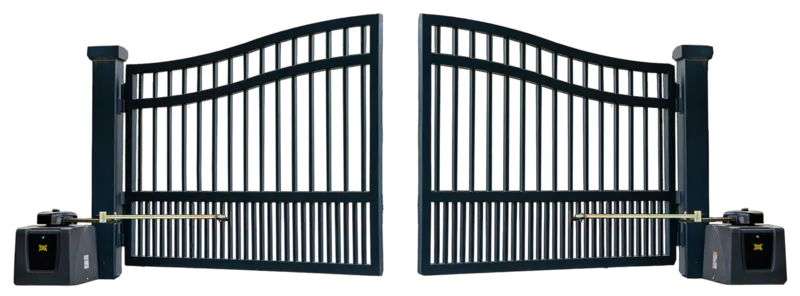
Custom Gate & Opener Installation
Get a custom automatic gate installed for your home. Free consultation included.
Claim OfferAbout Us
Licensed and Certified
Contact Us
5.0
out of 5 stars
Hundreds of Happy Customers
Real reviews from real customers — see what they have to say about their experience with DC Controls.


Daniil S.
13 June 2026
Guys definitely know what they are doing. We have them instal a motor and recently upgraded our keypad. Use them once and you will be with them for the long run.


Sergey S.
12 June 2026
I recently had a gate opener installed at my house and couldn’t be happier with the service. The installation was clean, efficient, and completed exactly as promised. The technician was knowledgeable, friendly, and answered all of my questions. Highly recommend!


Valerie Q.
19 May 2026
Thank you Alex and Daniel and Julian! We appreciate the excellent customer service and the extra effort to make sure everything was running smoothly for us! 😊 …


Ready for an Automatic Gate in Cameron Park?
Contact DC Controls today for a free on-site estimate on automatic gate installation in Cameron Park. Licensed, insured, and locally trusted.