
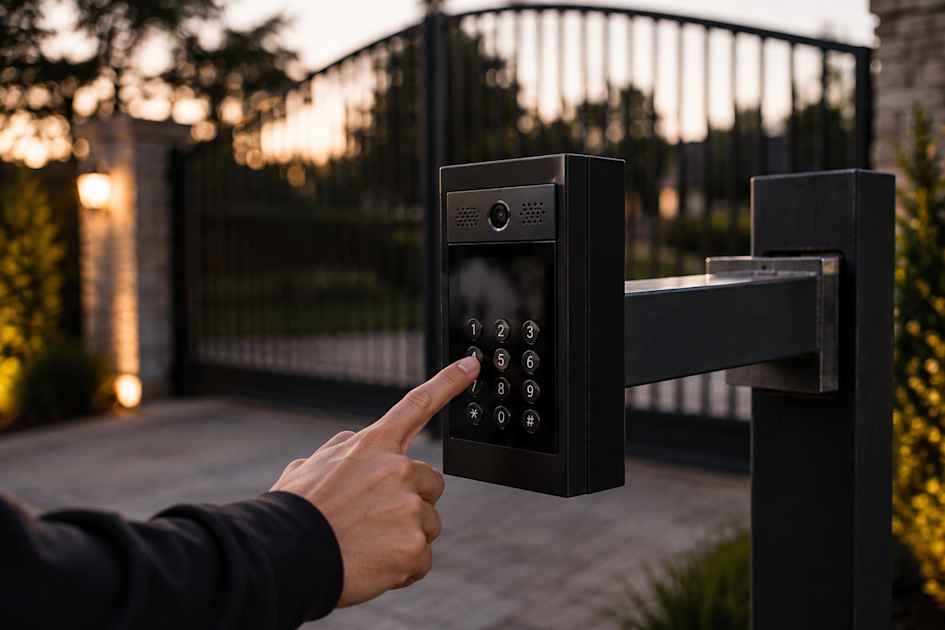


Quick answer: A gate access control system controls who can open your gate — through a keypad code, video intercom, smartphone app, or cellular/telephone entry — and can log every entry. The right choice comes down to how many people need access, whether it's a home, business, or multi-resident property, and how far the gate is from the house and from cell or internet signal.
An automatic gate keeps your property closed; access control decides who gets in. From a single-family driveway to a 200-home gated community, the right system adds real convenience and a genuine security layer — and the wrong one turns into daily friction and service calls. In 25+ years wiring access control across Sacramento — as a licensed General “A” & “B” contractor (C-61/D28 and C-13, CA #1114559) that self-performs the electrical in-house — from rural cellular entries to commercial sites in Rancho Cordova and multi-resident communities in El Dorado Hills, we've learned the choice is less about the fanciest device and more about matching the system to how people actually come and go. Here's how each method works and how to choose.
What is gate access control?
Gate access control is any device or system that grants or denies entry at your gate. Instead of everyone needing a remote, visitors and residents are verified by a code, a call, a phone, or a credential — and you stay in control from anywhere. A good system also answers a question a plain remote can't: who came in, and when.
Types of gate access control
The four methods most Sacramento properties use, at a glance:
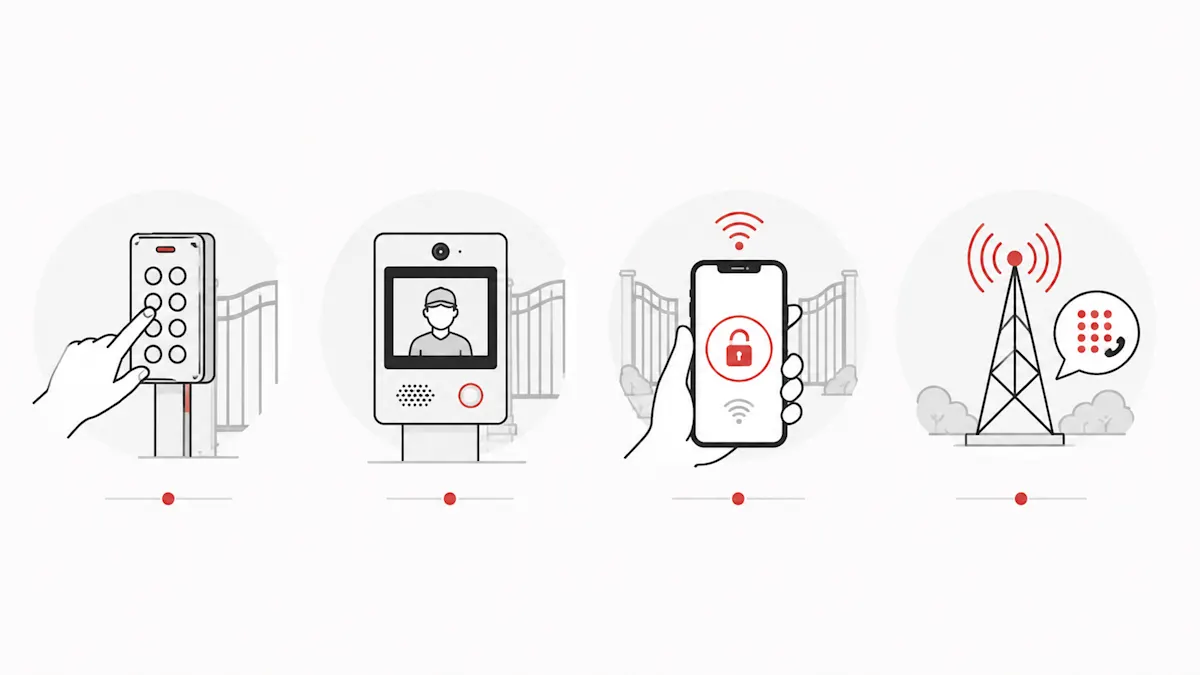
| Method | Best for | Needs | Notes |
|---|---|---|---|
| Keypad | Homes, small businesses | Power | Simple code entry; change codes anytime |
| Video intercom | Homes wanting to see visitors | Power / network | See & talk before opening |
| Smartphone app | Tech-forward homeowners | Wi-Fi/cell | Open from anywhere, grant temp access |
| Cellular / telephone entry | Multi-resident, gated communities | Cell signal | Calls a resident's phone to buzz guests in |
Most real installs combine two of these — for example a keypad for the family plus a video intercom or app for visitors. You're not locked into one method.
Which access control is best for a home vs. business vs. community?
This is the decision that matters, and it's driven by how many people need access and whether you need a record of entries.
Single-family home
A keypad handles the family and trusted regulars; add a video intercom or app so you can see a visitor and buzz them in from inside or from your phone. For most Sacramento-area homes that combination is the sweet spot — simple for daily use, controlled for guests.
Business or commercial site
Here you usually want credentials — a keypad code or a proximity card/fob for each employee — plus entry logging so you have an audit trail of who came and went. For yards and lots with trucks, we also plan free-exit (a loop or sensor that opens the gate automatically as vehicles leave) so staff aren't stuck punching codes on the way out. See our commercial gate services.
Gated community or multi-tenant property
This is what telephone entry was built for. A single directory panel at the entrance lets a guest look up any resident and call their phone; the resident presses a key to open the gate. Add resident credentials for daily access, and — critically in California — an emergency-responder solution so fire and EMS can get in. Start with a telephone entry system.
Don't forget emergency and delivery access
The step homeowners and HOAs most often overlook: how do the people you didn't give a code to get in when it matters? We plan for this on every gated property:
- Fire & EMS access. Many local fire districts require an approved means of entry — a Knox key switch or a radio-activated emergency opener — so responders aren't stopped at your gate in an emergency.
- Mail & deliveries. A postal lock or a delivery code keeps USPS, packages, and services moving without handing out your main code.
- A backup method. If your primary system leans on internet or cell, we make sure there's a second way in — a keypad or credential — so a network outage never locks you out.
Can I add access control to an existing gate?
In most cases, yes. If your gate already has an opener, we can wire a keypad, intercom, or app controller straight into the operator's control board — it's a clean retrofit. If the gate isn't automated yet, we'll handle both the opener and the access control together. Start with gate opener installation.
Mistakes we see with access control
- Disposable consumer kits. The bargain keypad from a big-box store isn't built for years of Sacramento sun and weather. We install and service professional-grade hardware that's rated for it.
- No surge protection. Gate electronics live outdoors on long wire runs that act like antennas in a storm. Without surge protection, one strike season can take out a control board.
- Poor pedestal placement. A keypad or intercom mounted at the wrong height or too far from the driver's window means leaning out of the car in the rain. We set the gooseneck pedestal at driver's-window height and reach.
- Line and low voltage in the same conduit. Run them together and you get interference and nuisance faults. They belong in separate runs.
- No entry log where one's needed. Businesses and communities often need to know who entered and when — that has to be designed in, not added later.
Convenience from your car — and anywhere
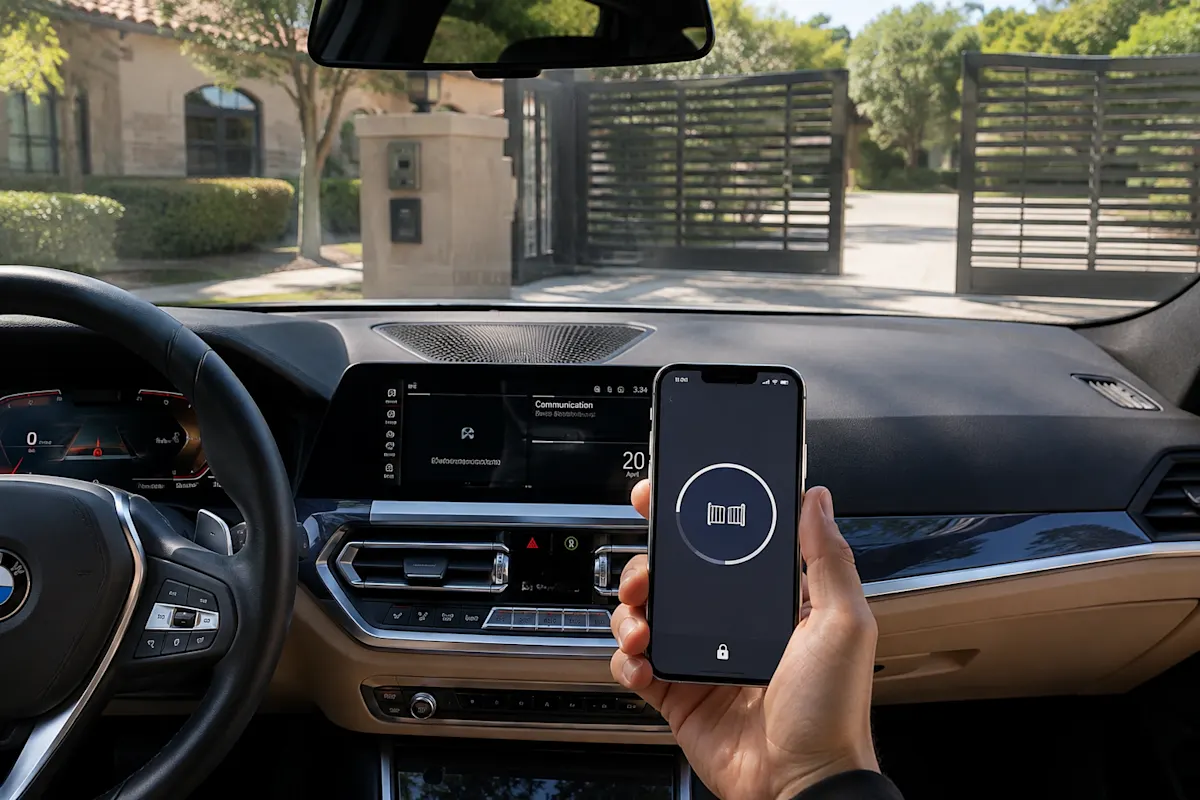
App and cellular systems let you open the gate from your car, or buzz in a delivery while you're across town at work. For many of our clients that's the feature that sells them — access control isn't just security, it's not having to drive home to let the plumber in.
For full residential and commercial setups — keypads, intercoms, apps, and multi-resident entry — see our access control systems and commercial gate services.
Frequently asked questions
Does gate access control work with my existing gate?
Usually yes, if it's already automated. We can retrofit most keypads, intercoms, and app controllers directly to the existing operator's control board.
Do cellular entry systems need Wi-Fi?
No — they use a cellular signal, which is why they're ideal for gates far from the house. We do check signal strength at the gate first, since that's what the system relies on. There's typically a small monthly cell plan.
How do fire and EMS get through a gated entrance?
Through whatever your local fire district requires — commonly a Knox key switch or a radio-activated emergency opener. We build this in so responders are never stopped at the gate, and so you stay compliant.
Can I give out temporary or one-time access?
Yes. App and modern telephone-entry systems let you issue guest codes or temporary access — handy for a house sitter, a contractor, or a weekend visitor — and revoke them when you're done.
Which brands do you install?
We install and service trusted, professional-grade brands including LiftMaster, DoorKing, and Viking — DoorKing in particular is the workhorse for community telephone entry. We don't hang disposable consumer kits on a gate that needs to last.


